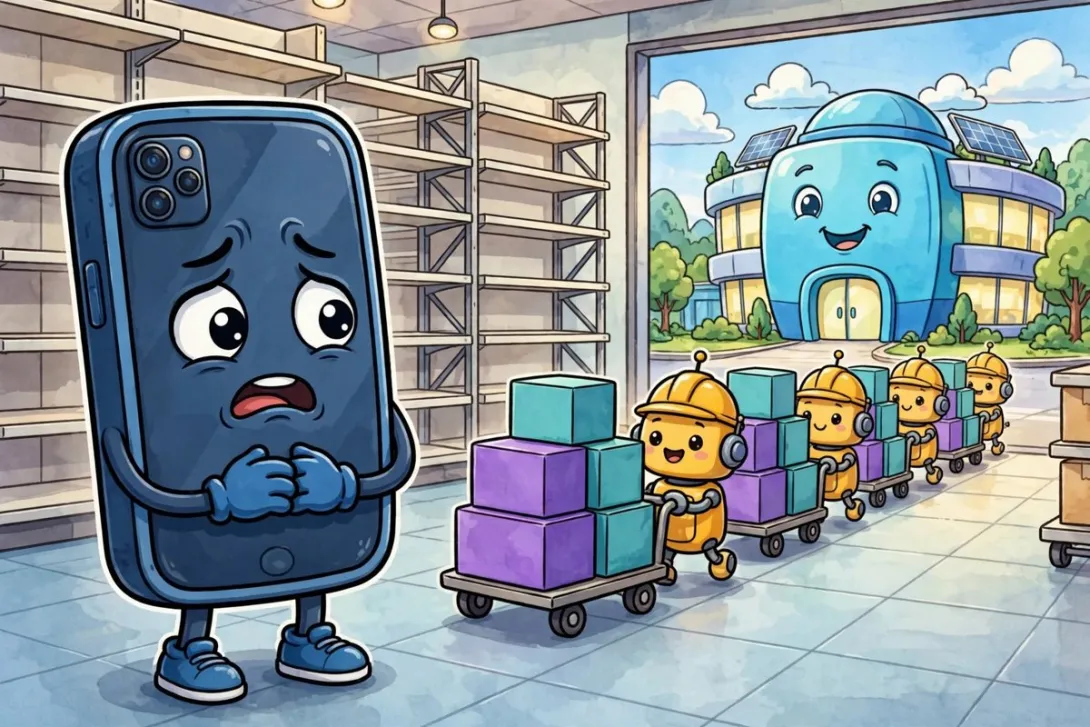
The smartphone market just had its roughest third quarter in 14 years, and the culprit is not a lack of demand for new phones. It is the memory inside them.
Global smartphone shipments fell 20% from a year earlier in the third quarter of 2026, reaching their lowest third-quarter level since 2012, according to preliminary estimates from Counterpoint Research reported by Reuters on Monday. The research firm pointed to soaring memory chip costs and supply shortages that have pressured manufacturers and pushed up retail prices.
The squeeze has a familiar source. AI infrastructure projects are cornering supplies of memory components, driving up production costs for phone makers. In response, manufacturers have raised prices, cut shipments, and prioritized profitability over volume — a shift that hits budget and mid-range phones hardest, because there is less margin to absorb a pricier memory chip.
Shoppers are reacting the way you would expect when prices climb. Counterpoint senior analyst Shilpi Jain said consumers are holding on to their devices longer than estimated, increasingly considering refurbished devices and prioritizing higher-value devices when they do buy. In other words, fewer people are upgrading on impulse, and those who do upgrade want the purchase to feel worth it.
The pain was not shared evenly. Samsung kept the top spot with a 23% market share, helped by demand for its Galaxy Z Fold8 series and stable component supplies for its mid-range devices, even as its own shipments fell 3% from a year earlier. Apple reached a 22% share, crossing 20% in a third quarter for the first time, despite a year-on-year decline in its shipments. Counterpoint noted that the absence of a base iPhone 18 model led to a smaller launch-month channel fill than the full iPhone 17 lineup managed a year earlier.
Further down the table, the drops were steeper. OPPO and vivo each recorded shipment declines of more than 20%. Xiaomi saw a fall of more than 30%, reducing its market share to 10%, as the company cut exposure to lower-priced devices and some overseas markets to protect margins.
For buyers, the takeaway is practical. If memory stays scarce, expect launch prices to stay firm, promotions to matter more, and last year's flagships and refurbished phones to look unusually attractive. For makers, the quarter is a reminder that the AI boom is reshaping consumer electronics from the supply side: the same memory feeding data centers is now deciding how many phones reach store shelves, and at what price.
The figures are preliminary, so the exact percentages could still be revised. But the direction is clear enough — this was not a normal seasonal dip, and the memory shortage behind it is the story to watch heading into the holiday season.